
A question-and-answer guide to online nursing education: what you can study from home, what requires in-person hours, and how state approval shapes your route to a license.
The quick take
- Online nursing programs are hybrids: coursework happens at home, but state boards require supervised, in-person clinical hours before you can sit for the NCLEX.
- California requires at least 500 direct patient care clinical hours, including 30 supervised hours in each specialty area, delivered concurrently with the related theory.
- Simulation can substitute for some clinical experience, but each state board of nursing decides how much substitution it allows.
- State boards publish first-time NCLEX pass rates for each approved program, so compare specific programs rather than online versus campus claims.
- Confirm your state board of nursing approves a program for students living in your state before you enroll or pay anything.
Nursing is the career change we get the most questions about, and it is also the field with the sharpest line between what can happen at home and what cannot. The classroom part of nursing school translates well to an online format. The patient care part does not, and state boards of nursing enforce that line with hour minimums, approved clinical sites and program approval rules. Here is how the pieces fit together for a working adult planning a switch.
Can you become a registered nurse through an online program?
Yes, with a catch. Every route to RN licensure includes supervised, in-person clinical training, so the honest description of an “online nursing degree” is a hybrid: coursework delivered online, clinical hours completed at assigned healthcare facilities. The National Council of State Boards of Nursing (NCSBN) notes that both prelicensure and advanced practice programs increasingly offer distance education courses, sometimes across state lines. One competency-based prelicensure BSN, offered only in a specific list of states, delivers all coursework online but requires seven in-person clinical rotations at local healthcare facilities and two in-person learning lab experiences at simulation centers, with rotations assigned within roughly 60 miles of a student’s district.
Which nursing courses can be taken online?
Most of them. In prelicensure programs, the didactic content, meaning lectures, readings, case studies and exams, is what schools move online. One community college hybrid program delivers its course content through web-assisted instruction with a minimum of 40 hours of self-study per week alongside its clinical day. At the RN-to-BSN level, schools report running even clinical courses such as health assessment online, using digital simulation tools where students examine virtual patients and practice gathering and interpreting patient data. Prerequisite science courses and general education requirements can often be completed online too, though each nursing program sets its own rules about which transfer credits it accepts and how grades are calculated.
Why do clinical hours have to happen in person?
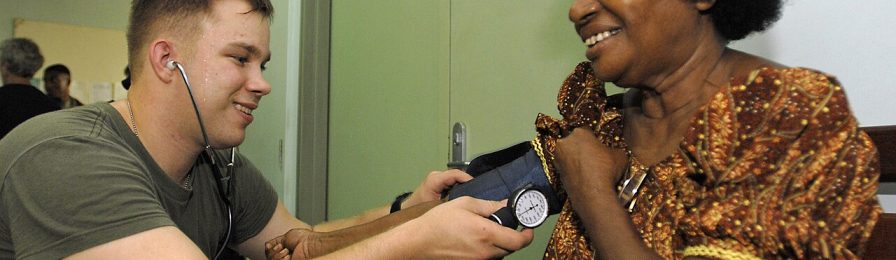
Because licensure depends on demonstrated hands-on care, not just knowledge. Nursing regulators define traditional clinical experience as time spent caring for real patients in hospitals, outpatient clinics or community settings, with an instructor or preceptor supervising the work. State boards set minimums for that work. California, for instance, requires at least 500 hours of direct patient care clinical training, including at least 30 hours of supervised direct patient care in each specified specialty area, and it requires that clinical hours run concurrently with the related theory coursework. That concurrency rule matters for online students: you cannot stockpile theory courses remotely and then schedule all of your patient contact at the end.
Can simulation replace some of those in-person hours?
Sometimes, within limits your state board sets. An expert panel drawn from simulation and nursing education organizations, boards of nursing and NCSBN published national guidelines for simulation in prelicensure programs, based partly on a national study in which every participating program required at least 600 hours of clinical experience. Those guidelines conclude that the quality of the experience matters more than the raw hour count, and that simulation led by capable faculty with meaningful debriefing can be a better alternative than a clinical placement offering little hands-on opportunity. During the COVID-19 pandemic, many LPN/LVN programs relied heavily on virtual simulation to keep clinical training going when sites restricted access. How much simulation can substitute for real clinical hours is decided by each state’s board of nursing, so ask programs directly what their boards allow.
Do online nursing graduates pass the NCLEX at the same rate?
There is no simple national answer, and any school that promises one deserves skepticism. What you can do is look up real numbers for specific programs. State boards of nursing publish first-time NCLEX pass rates for each approved program; California’s board, for example, posts annual rates covering July 1 to June 30 for each approved prelicensure program and updates the list each fall. NCSBN has also said the exam will hold to the same standard of rigor whether a candidate tests at a center or online, and the organization has been developing technology to allow online testing with identity verification, in addition to traditional test centers. When you compare programs, compare the pass rate of the program you would actually attend, not the delivery format.
What kinds of online nursing programs exist?
The dividing line is licensure. Before you hold a nursing license, states require significant in-person training. After you are licensed, the rules loosen considerably, which is why RN-to-BSN completion programs are the most fully online option in nursing. One state university, for instance, runs its RN-to-BSN entirely online over five semesters for part-time students who already hold an associate degree and an RN license.
| Program | Who it is for | What happens online and in person |
|---|---|---|
| LPN/LVN | Future licensed practical or vocational nurses | Theory coursework online; during the COVID-19 pandemic many programs leaned on virtual simulation for clinical training, and requirements vary by state board |
| Associate degree in nursing (ADN) | Future RNs wanting the shortest prelicensure route | Hybrid: didactic coursework online plus scheduled in-person clinical days |
| Prelicensure BSN | Future RNs who want the bachelor’s degree first | Online coursework plus multiple in-person clinical rotations and lab experiences |
| RN-to-BSN | Already licensed RNs adding the bachelor’s degree | The most fully online format; clinical content often delivered through digital simulation and projects tied to current practice |
How much time does a hybrid nursing program take each week?
More than most online certificates, by a wide margin. The community college example above runs four semesters and requires one on-campus clinical day of 12 to 14 hours per week, on top of at least 40 hours of web-assisted self-study. That school explicitly advises students not to work full time during the program. Hybrid nursing schedules also tend to be fixed, because clinical cohorts, lab days and simulation appointments cannot be shifted the way a recorded lecture can. Admission is often selective, with a committee choosing the class.
What do science prerequisites look like for online applicants?
Expect hard cutoffs, not soft suggestions. The same community college program requires all general education courses finished before applying, with a grade of C or better and a cumulative GPA of at least 2.7, and microbiology completed before the third nursing course. Applicants must pass the TEAS entrance exam and show a clean criminal background check. That program also requires at least six months of hands-on patient experience in a hospital or sub-acute setting, in roles such as LPN, CNA, EMT, ER tech or patient care assistant, and it weighs patient experience and GPA heavily in admissions decisions. Requirements vary by school, but the pattern of science prerequisites, an entrance exam and a background check is common.
How do you check that a program is approved where you live?
Start with your state board of nursing, not the school’s marketing pages. Some programs are approved only for students physically present in certain states; one public university’s prelicensure BSN, for example, is approved only for students in Georgia or Alabama, with clinical placements restricted to those two states. Federal rules also require institutions to disclose whether a curriculum aligns with licensure requirements in other states, so ask the question directly if the disclosure is hard to find. NCSBN publishes each state board’s requirements for distance education in prelicensure programs, which helps when a program’s coursework or clinicals cross state lines; in some cases faculty may even need licenses in the host states. Every state board sets its own criteria for initial RN licensure, which can include testing, background and fingerprint checks, applications and fees. Our article on state authorization and moving mid-program explains this layer in more detail.
Watch for
Never enroll in a prelicensure nursing program, or pay a deposit, before confirming with your state board of nursing that the program is approved for students living in your state. Graduating from an unapproved program can leave you unable to sit for the NCLEX.
What role do background checks play?
A large one, and it starts before admission. The community college program above requires a clean background check and states that clinical sites will not accept students with any record hits. California’s board may deny a license to an applicant convicted of a crime substantially related to nursing duties, generally looking back seven years, or to an applicant with formal discipline in that period. State licensing boards commonly require background or fingerprint checks as part of initial licensure. If you have anything on your record, ask your state board about it before you invest a year of prerequisites.
What does an online nursing path cost?
The format does not automatically make it cheaper. The California Board of Registered Nursing posts cost figures for each approved program, and they range widely: one associate degree option lists tuition of $3,588 to $3,772 plus about $6,500 in startup program costs, while one four-year bachelor’s degree lists total costs of $294,688, with a two-year transfer path listed at $147,344. Online and hybrid formats can reduce commuting and housing expenses, but nursing adds costs many career changers do not anticipate, such as clinical travel, uniforms, lab fees, entrance exams and background checks.
Before you commit, size up the schedule as carefully as the tuition. See how many hours an online course really takes each week and what an online degree really costs to build a realistic picture of your first term.
You might be wondering
Q: Can I finish nursing clinicals online?
A: No. State boards define clinical training as care of real patients under an instructor or preceptor, so prelicensure hours happen in person. Digital simulation can cover some clinical content, especially in RN-to-BSN programs for already licensed nurses.
Q: Can I take the NCLEX online?
A: NCSBN has been developing technology to allow online NCLEX testing with identity verification, alongside traditional test centers. The organization has said the exam will hold to the same standard of rigor either way.
Q: Can I work full time during a hybrid nursing program?
A: Some schools advise against it. One hybrid program requires an on-campus clinical day of 12 to 14 hours each week plus a minimum of 40 hours of web-assisted self-study, and it explicitly recommends that students not work full time.
Q: What grades do I need to get into a hybrid nursing program?
A: Requirements vary by school, but one community college example requires general education courses completed with a grade of C or better, a cumulative GPA of at least 2.7, a TEAS entrance exam score and a clean background check.
Policies differ by school and change over time. This guide is general information for online students in the U.S.; check your school’s current policies and your program’s requirements before you enroll.